Art and Design
Intent, Implementation and Curriculum Impact
Intent
In the Early Years Foundation Stage, it is our intention that children who attend Occold Primary School should develop a curiosity and enjoyment of art, craft and design through frequent opportunities to explore, experiment and create. They should become increasingly confident in selecting and using materials, tools and techniques and begin to talk about their artistic choices.
Years 1 - 6 (Key Stages 1 & 2)
We are passionate about providing a rich, creative and purposeful Art and Design curriculum which enables all children to become confident, curious and reflective artists. Through practical experiences, children learn to explore ideas, experiment with materials, develop techniques and communicate meaning through art. We want pupils to develop the resilience, resourcefulness, independence and confidence to take creative risks, learn from mistakes and refine their work.
Art is an important way for children to make sense of the world around them. It provides opportunities to observe closely, express ideas and feelings, respond to the work of others and develop their own visual language. Our curriculum encourages children to understand that art is not simply about producing a finished product; the creative journey, experimentation, decision-making and reflection are equally important.
Our Art and Design curriculum is informed by the broad and flexible approach of the AccessArt Primary Art Curriculum. AccessArt places emphasis on open-ended creative learning, helping pupils learn through art as well as about art. Our curriculum provides opportunities to explore a wide range of disciplines, materials, techniques, artists and ideas.
In line with the National Curriculum and our school values, our intent is that all pupils:
- develop creativity, imagination and confidence through a broad range of artistic experiences
- develop increasing control and fluency in drawing, painting, printing, collage, textiles, sculpture and other forms of making
- use sketchbooks to explore, practise, collect, experiment, record observations and develop ideas over time
- learn about a diverse range of artists, craftspeople, designers and creative practitioners and use their work as a stimulus for discussion and pupils’ own work
- develop an understanding of the formal elements of art, including line, shape, colour, pattern, texture, form, space and tone
- experiment purposefully with materials and techniques, making choices about how to communicate ideas
- develop the confidence to take creative risks, embrace unexpected outcomes and persevere when ideas do not work first time
- reflect on and evaluate their own work and the work of others using appropriate artistic vocabulary
- make meaningful connections between art and other areas of the curriculum, including English, history, geography, science, music, computing and Design and Technology
- experience art as a means of personal expression, communication, collaboration and connection with the wider world
- develop an appreciation of art within the local community, wider British culture and diverse cultures and traditions around the world
- recognise the relevance of creativity and the visual arts beyond school, including links to future learning and careers.
Implementation
Our Art and Design curriculum is carefully sequenced so that children build on prior knowledge, vocabulary and practical skills as they move through the school. It is aligned with the National Curriculum and supported by a clear progression of knowledge and skills. Teaching is designed to ensure that children revisit and deepen core disciplines rather than simply encountering a technique once.
We use the AccessArt Primary Art Curriculum as a key source of curriculum structure, ideas and teacher support. Its pathways are organised around broad areas of artistic exploration, enabling pupils to experience a balanced curriculum across Drawing & Sketchbooks; Print, Colour & Collage; Working in Three Dimensions; Paint, Surface & Texture; and Collaboration & Community. The pathways also provide opportunities for pupils to make connections between disciplines and to explore how artists work in different ways.
Where appropriate, AccessArt pathways are adapted to reflect our mixed age classes, the local environment and the interests and needs of our pupils. This enables the curriculum to remain coherent and progressive while giving teachers the flexibility to respond creatively to their classes.
Curriculum strands and progression
Drawing and Sketchbooks: children develop observation, mark-making, line, tone, composition and visual recording. Sketchbooks are used as working spaces for experimentation, reflection and the development of ideas.
Print, Colour and Collage: children explore colour relationships, pattern, texture, shape, layering, repetition and a range of printing and collage processes.
Working in Three Dimensions: children investigate form, structure, construction and sculpture, learning to manipulate and combine materials to create three-dimensional outcomes.
Paint, Surface and Texture: children explore colour mixing, brushwork, surface, texture and expressive mark-making, learning how artists use paint in different ways.
Collaboration and Community: children experience art as a shared activity, exploring themes connected to place, nature, culture, identity and community and developing their ability to contribute to collective outcomes.
Learning follows an exploratory and iterative process. Teachers introduce key vocabulary, artists, artworks, materials and techniques before modelling processes where appropriate. Children then have time to explore, practise, experiment, make decisions and develop their own responses. Lessons value questions and discoveries rather than expecting every child to produce the same outcome.
Artists and artwork are used to broaden children's understanding of what art can be and to provide meaningful starting points. Children encounter a diverse range of historical, contemporary, British and international artists, craftspeople and designers. Discussion about artwork develops visual literacy and gives children opportunities to articulate observations, interpretations and personal responses.
The local environment and community are important sources of inspiration. Children are encouraged to observe and respond to the landscape, architecture, wildlife and cultural life of Occold and the wider Suffolk area. Where possible, links with local artists, creative practitioners, community projects and places of cultural interest enrich children's experiences.
Cross-curricular learning is encouraged where it strengthens understanding. Art may support learning in history through the study of periods and cultures, in geography through place and landscape, in science through natural forms and materials, in English through illustration and storytelling, in music through visual responses to sound, and in Design and Technology through design, construction and material exploration.
Inclusion is central to our approach. Teachers provide appropriate scaffolding, modelling, adapted materials and tools, additional adult support and alternative ways of recording or communicating ideas where needed. High expectations are maintained while ensuring that every pupil can participate meaningfully and experience success.
Assessment is ongoing and supports learning. Teachers use questioning, observation, discussion, sketchbooks, practical work and finished outcomes to check understanding and identify next steps. Children are encouraged to talk about their choices, respond to feedback and reflect on their progress. Assessment focuses on the development of knowledge, skills, creative behaviours and confidence rather than simply judging the final product.
Curriculum Impact
The impact of our Art and Design curriculum is seen in children who become increasingly confident, independent and reflective artists. By the end of their time at Occold Primary School, pupils should have developed a secure body of artistic knowledge alongside the practical skills, vocabulary and creative behaviours needed to apply that knowledge independently.
By the time children leave our school they will:
- use sketchbooks confidently as places to explore, practise, record observations, develop ideas and reflect on learning
- draw with increasing confidence and control, using line, shape, tone, texture, pattern and composition to communicate ideas
- understand and apply knowledge of colour, including mixing and relationships between colours
- have experience of printing, collage, painting, textiles, sculpture and other forms of making, selecting techniques and materials appropriately
- experiment with materials and processes and respond positively to unexpected results
- develop and refine ideas rather than expecting their first idea to be their final one
- talk confidently about their own artwork and the work of artists using increasingly precise artistic vocabulary
- make thoughtful connections between artists, techniques, materials, ideas and the wider curriculum
- show resilience, curiosity and independence when solving creative problems and developing their own responses
- work collaboratively when appropriate, contributing ideas and respecting the creative decisions of others
- understand that artists and designers communicate ideas, explore identity, respond to their surroundings and can influence society and communities
- recognise that there are many different ways to be an artist and that creativity has relevance in everyday life, further education and future careers
The quality and impact of the Art and Design curriculum are monitored by the subject leader through lesson observations, scrutiny of sketchbooks and outcomes, discussions with teachers and pupils, and review of planning, progression and curriculum coverage. This information is used to identify strengths, address gaps and refine provision so that the curriculum remains ambitious, coherent, inclusive and responsive to pupils' needs.
Ultimately, we want children to leave our school with the confidence to look closely, ask questions, experiment, create, reflect and express themselves. We want every child to recognise that their ideas have value and that art is a powerful way to understand themselves, other people and the world around them.
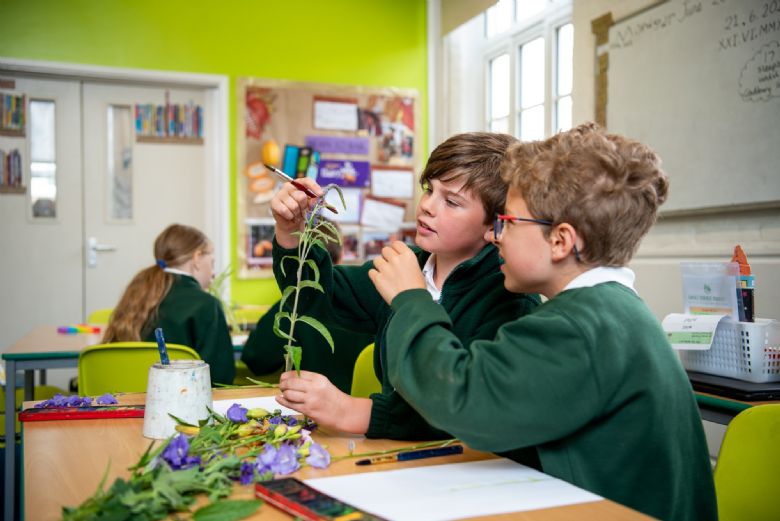
As I work at my drawings, day after day, what seemed unattainable before is now gradually becoming possible. Slowly, I'm learning to observe and measure. I don't stand quite so helpless before nature any longer.
Vincent Van Gough, artist.